
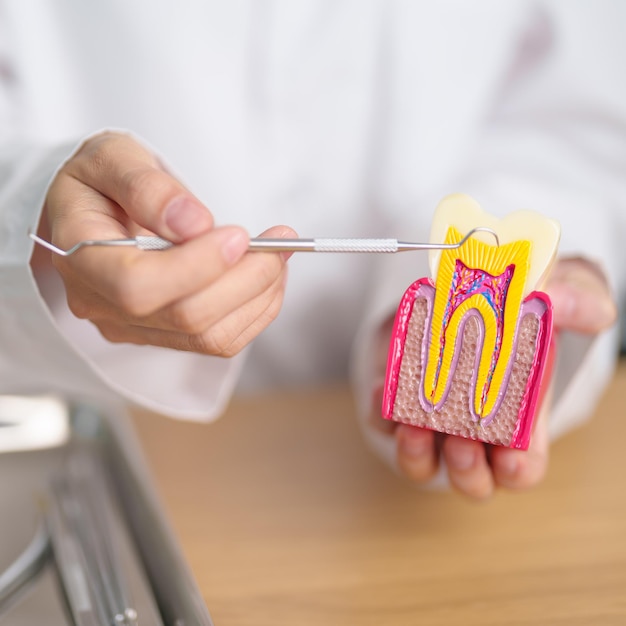
Why does pain come back after a root canal? Many people who have already had root canal treatment in Charleswood may still notice pain or unusual symptoms after some time. While most root canal treatments are successful, there are cases in which the tooth may not heal properly or become infected again, leading to discomfort and concern.
Understanding the signs of a failed root canal and knowing the right next steps can help save the tooth and avoid further problems.
What is a Failed Root Canal?
A failed root canal happens when the treated tooth does not heal as expected or gets infected again. This can occur weeks, months, or even years after the procedure.
Common reasons include:
- Remaining bacteria inside the tooth
- New decay affecting the treated tooth
- Cracks or damage in the tooth
- Problems with the filling or crown
Early detection is important to prevent further damage.
What are the Signs of a Failed Root Canal?
People often search for the signs of a failed root canal when they start noticing discomfort after treatment. These signs should not be ignored.
Common warning signs:
- Ongoing or returning tooth pain
- Sensitivity to hot or cold that does not go away
- Swelling in the gums near the treated tooth
- Small bump or pimple on the gums
- Bad taste or odor in the mouth
- Pain while biting or chewing
These symptoms may indicate infection or poor healing.
When Should You Visit a Dentist?
A dentist near you should be consulted as soon as any of these symptoms appear. Waiting too long can lead to more serious infection and possible tooth loss.
Early treatment helps:
- Save the natural tooth.
- Reduce pain and discomfort.
- Prevent the spread of infection.
Regular checkups also help detect issues early.
Why Do Root Canals Fail?
Even with proper care, some root canals may fail for various reasons.
Common causes:
- A complex root structure that was hard to clean
- Delayed placement of the crown after treatment
- New infection entering the tooth.
- Weak or cracked tooth structure
- Poor oral hygiene after treatment
Each case is different and requires careful evaluation.
What are the Retreatment Options?
If a root canal fails, there are effective ways to treat the problem. Understanding what the retreatment options are helps patients feel more confident about the next steps.
1. Root Canal Retreatment
Root canal treatment near you may be repeated to remove infection and clean the tooth again.
Process:
- Old filling material is removed.
- The inside of the tooth is cleaned again.
- New filling is placed.
- A crown may be added for protection.
This option helps save the natural tooth in many cases.
2. Apicoectomy (Minor Surgery)
If retreatment is insufficient, a small surgical procedure may be performed.
What happens:
- The tip of the tooth root is removed.
- Infection is cleaned from the area.
- The root is sealed to prevent further issues.
This is usually recommended when the infection remains deep in the root.
3. Tooth Extraction
A dental clinic in Charleswood may suggest removing the tooth if it cannot be saved.
After extraction:
- Tooth replacement options are discussed.
- Options may include implants or bridges.
This is usually the last option when other treatments are not possible.
How to Prevent Root Canal Failure
Preventing failure is possible with proper care and habits.
Tips to follow:
- Maintain good oral hygiene.
- Brush and floss daily
- Visit a dentist regularly.
- Avoid chewing hard foods.
- Get a crown placed if recommended.
These steps help protect the treated tooth.
What to Expect After Retreatment
After retreatment, mild discomfort is normal and usually improves quickly.
Recovery tips:
- Take prescribed medications if needed.
- Avoid hard foods for a few days.
- Keep the area clean
- Attend follow-up visits
Healing depends on the condition of the tooth and the treatment method.
Don’t Ignore Tooth Pain – Get it Checked Early!
Noticing early signs of a failed root canal and getting care at the right time can make a big difference in saving your tooth and avoiding serious problems later. Taking quick action helps reduce pain and supports better long-term oral health. Schedule your visit with Aspire Dental Centre today and move forward with trusted, comfortable care for a healthier, stronger, and pain-free smile.
FAQs
What are the signs of a failed root canal?
Common signs include ongoing pain, swelling, sensitivity, bad taste, and discomfort while chewing, which may indicate infection.
Can a failed root canal be fixed?
Yes, many failed root canals can be treated with retreatment or minor surgical procedures to save the tooth.
Is retreatment painful?
Retreatment is usually comfortable because the area is numbed, and only mild soreness may occur afterward.
How long does retreatment take?
It may take one or two visits, depending on the condition of the tooth and the level of infection.